



-
The sport-related VC ecosystem is thriving, with $12.5Bn+ poured into fan-centric tech (65% of deals), athlete brand infrastructure, and "picks and shovels" like data platforms and stablecoin rails in 2025.
-
The global sports ecosystem is experiencing a profound realignment as traditional silos between media, technology, and finance break down.
-
High-fidelity data technologies and AI are professionalizing athletics at all levels. Athletes are emerging as sovereign media entities, cultivating huge personal digital brands, direct-to-fan content, and revenue streams that often outpace their teams.
-
10SQ team is actively tracking the sports attention economy and targeting portfolio investments in high-conviction infrastructure plays like fan data platforms, athlete brand tools, and AI-driven engagement tech.
Sports x Attention Economy
Sports is one of the largest segments of the attention economy; it commands unparalleled attention, with billions tuning into events and leagues generating sticky fan engagement that outperforms traditional media.
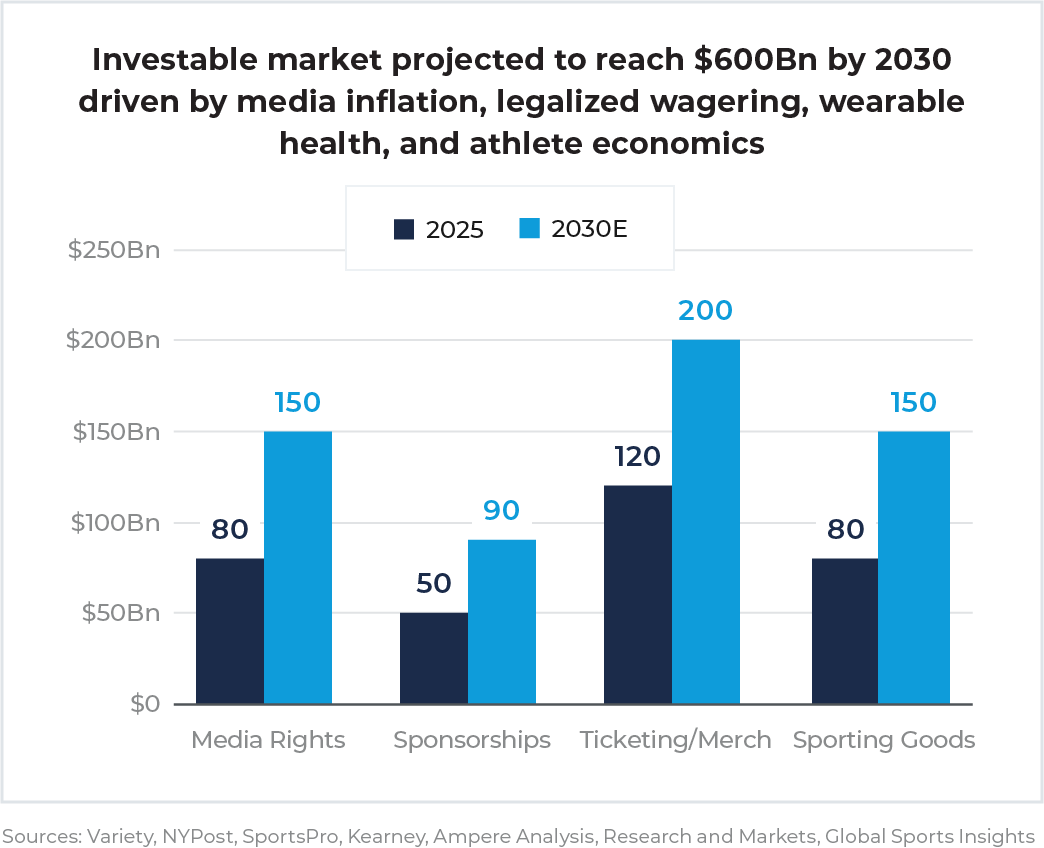
Sports TAM exceeds $300Bn globally (including media, sponsorships, ticketing, and merchandising), with North American leagues driving much of the growth amid mega-events like the 2026 World Cup.
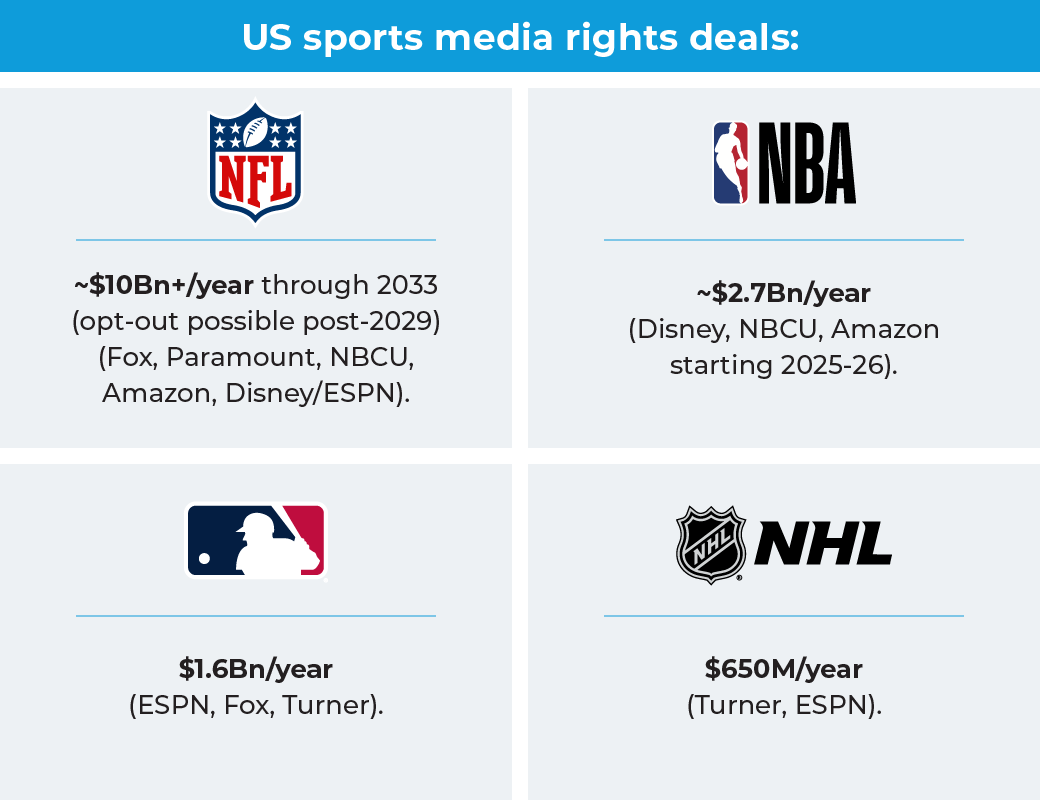
In 2026, the intersection of sports and the attention economy appears to be at an inflection point. Major shifts like athletes emerging as sovereign media entities and creators, new fan experiences, explosion of prediction markets and betting integration, streaming dominance, AI-driven personalization, and integration of blockchain-based payments are driving sports to compete fiercely for fragmented fan attention.
The sport-related VC ecosystem (encompassing sports tech, sports media, fan engagement, performance tech, and broader sports-adjacent investments) has shown strong momentum heading into 2026. Overall, 2025 ranked as one of the strongest years for sports tech deal flow (potentially the second-biggest ever, with $12.5Bn+ disclosed through late 2025 (Global SportsTech VC Report).
Fan-Centric Tech Surge Redefines Sports Engagement
STRONGEST MOMENTUM TOWARDS FANS
VC sports funding has tilted strongly toward technologies that enhance fan experiences, monetization, and direct-to-consumer (D2C) models. In 2025, fan-related solutions captured around 65%+ of total funding (up from prior years), driven by massive deals in areas like immersive platforms (e.g., Napster Corp/Infinite Reality at $3Bn) and streaming/broadcasting (e.g., DAZN at $2.4Bn). This reflects investors chasing higher fan willingness to pay for premium, personalized content as sports increasingly blends with media and entertainment.
-
Team Apps: The NBA’s league-wide “NBA App” plus each team’s app feed news and AR experiences to fans. MLS clubs use apps to send exclusive content and ticket promotions. The NFL launched the NFL+ streaming service (contributing team revenue sharing and collecting user data). Internationally, soccer clubs use club apps for memberships (e.g., Man City Cityzens program) tied to exclusive content.
-
Loyalty Programs: Teams run loyalty programs (points for buying merch/tickets) that offer perks (discounts, meet-and-greets). Airlines and airlines-style MVP clubs are adapting similar models for sports fans.
-
Direct-to-Consumer (D2C): More teams sell merchandise, NFTs, and content directly via their sites/apps, tracking each fan’s profile. This builds valuable data assets (email lists, shopping habits) which are leveraged for targeted marketing.
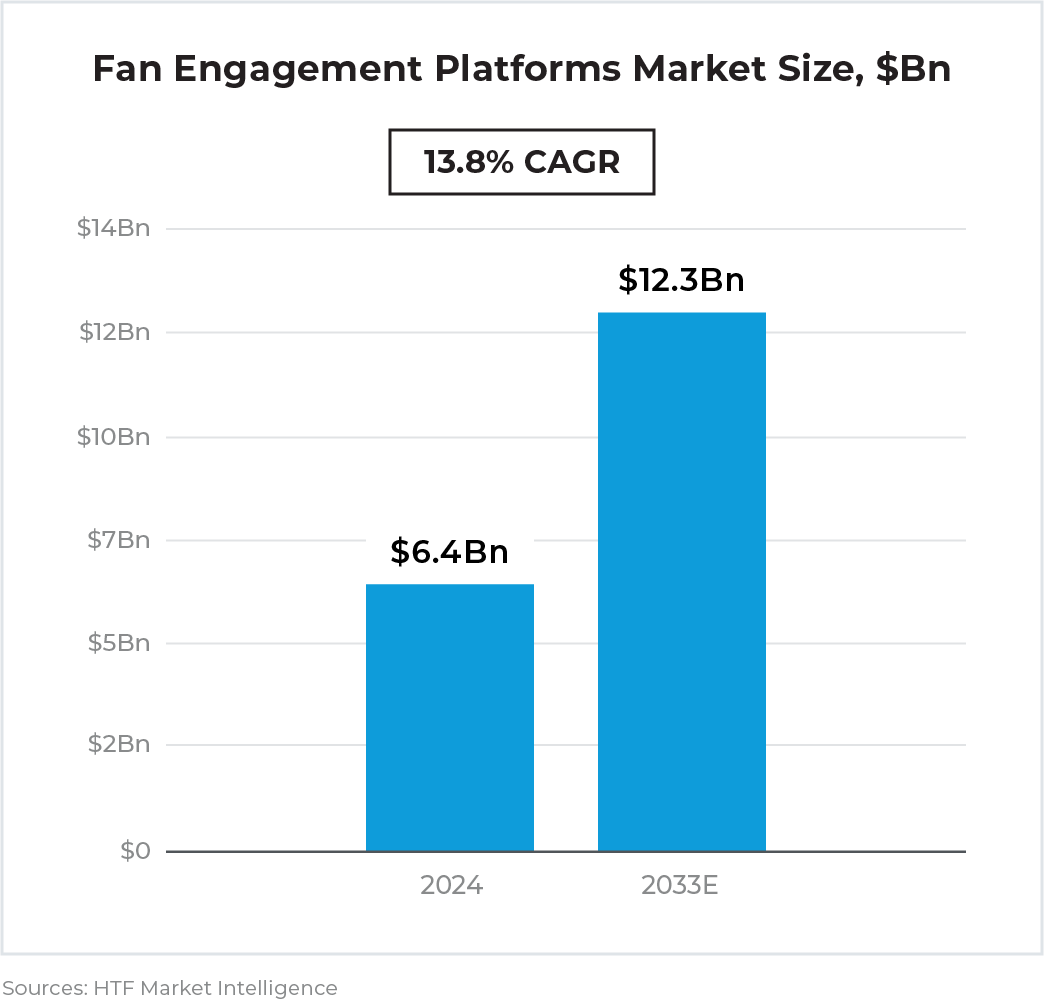
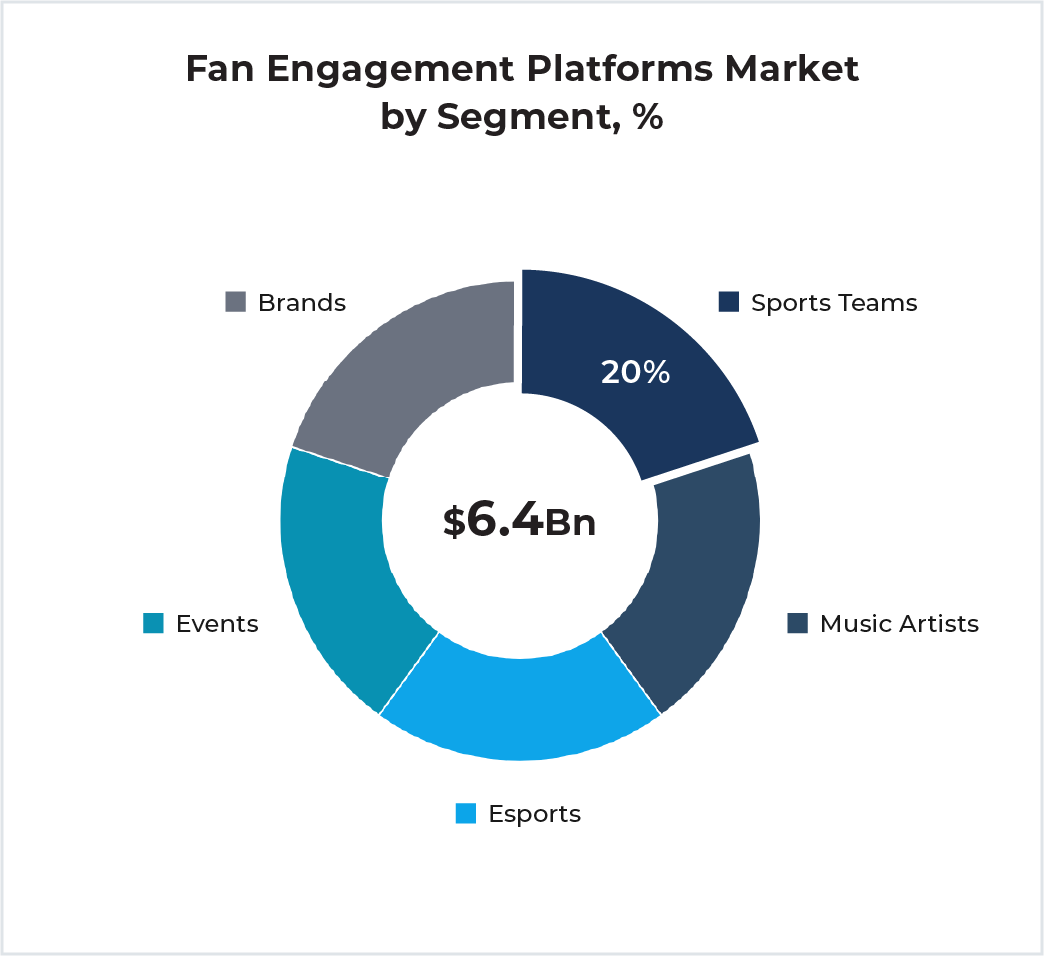
The sports business is undergoing the same profound transformation that finance experienced a decade ago - when traditional banking platforms evolved into comprehensive full-stack fintech ecosystems. That shift is now accelerating rapidly in sports.
Teams and leagues are moving far beyond conventional tickets and sponsorships, actively recruiting top technologists, modernizing core infrastructure, and pioneering new revenue streams in prediction markets, next-gen ticketing, fan-centric data ownership, payments/tokenization, and digital identity solutions. This creates prime opportunities for startups building the enabling infrastructure.
Athletes Eclipse Leagues in Sports Attention Economy Gold Rush
ATHLETES AS PLATFORMS
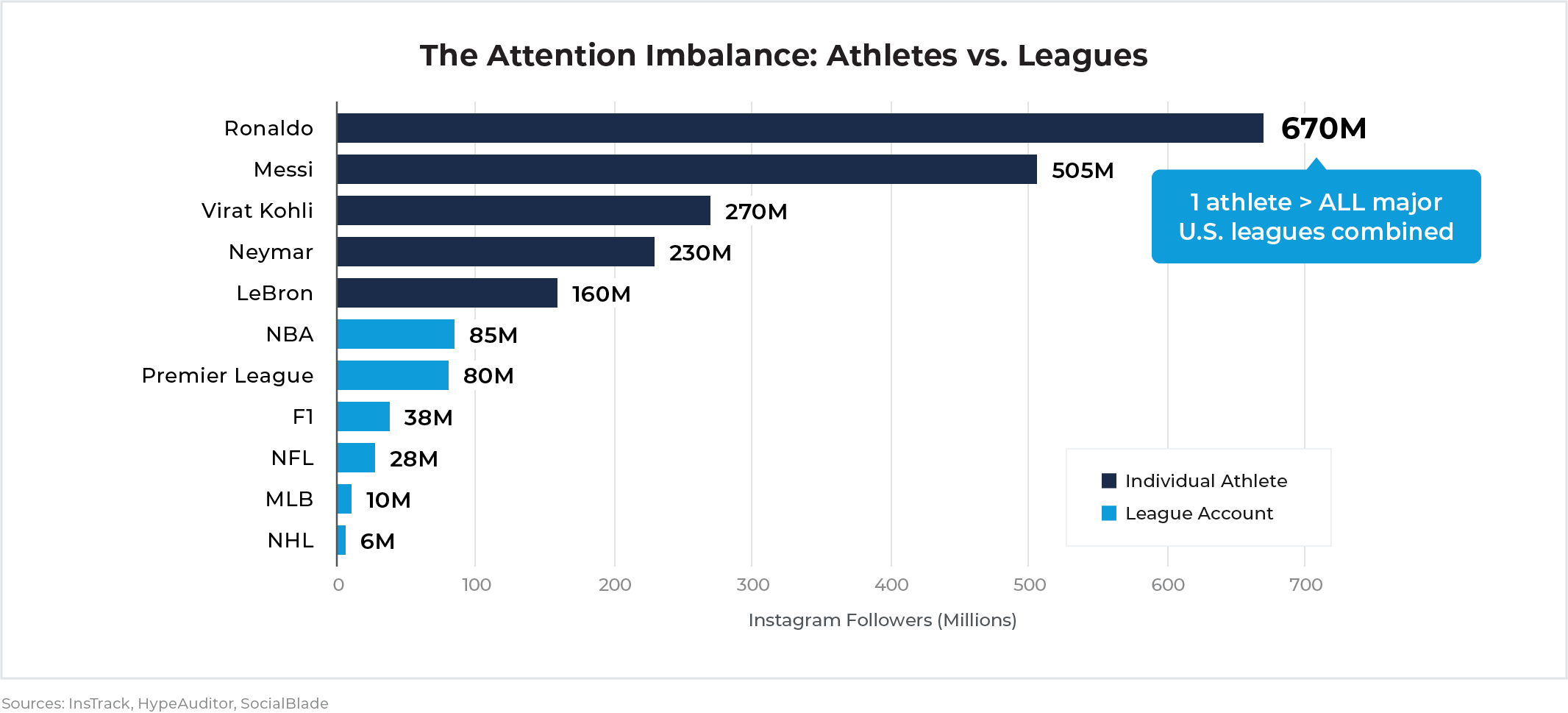
Today, top athletes often surpass leagues in social reach, reshaping marketing and sponsorship strategies. Leagues tap stars' clout for promotion, while sponsors and broadcasters focus campaigns on individuals.
Influencer Evolution: Athletes emerge as content creators and influencers producing podcasts, TikToks, and stories, which require active personal brand and fan management.
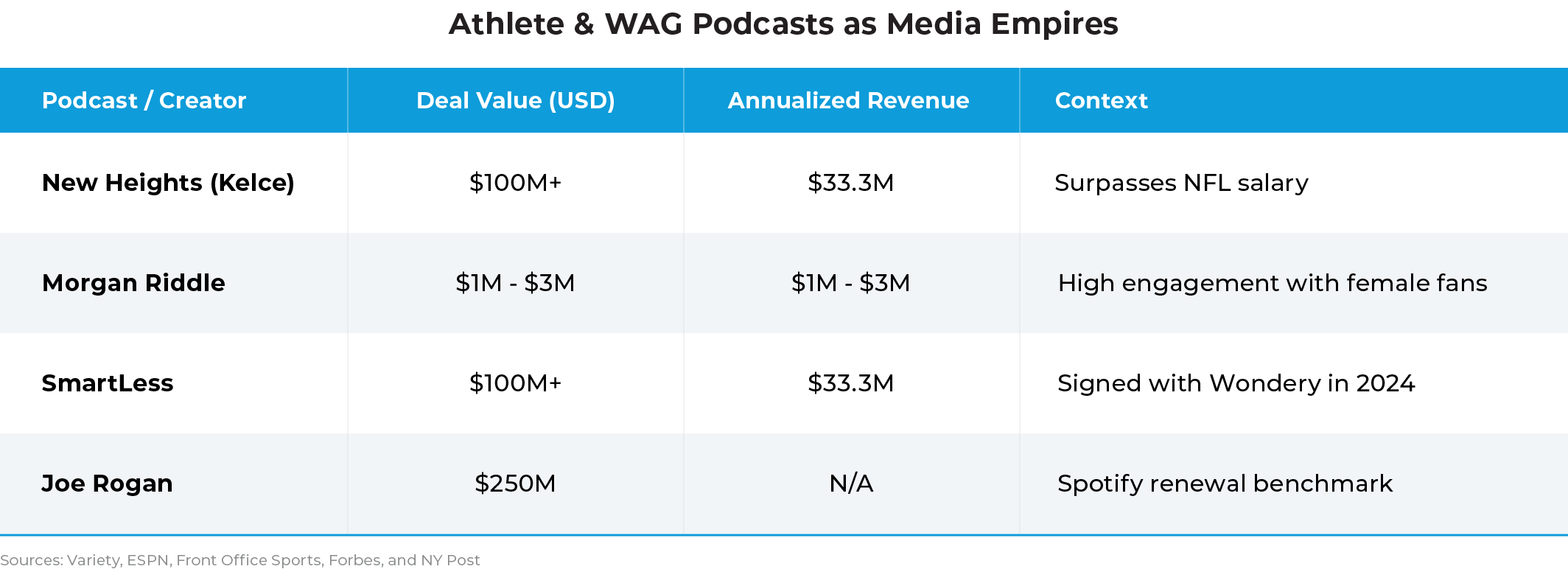
Brand Boom: The personal brand surge enables niche athletes to monetize Instagram/TikTok narratives for sponsorships beyond sports. Pros like Travis and Jason Kelce exemplify this as their own broadcasters: New Heights podcast secured a three-year, $100M+ Amazon Wondery deal - $33.3M annually, topping their NFL salaries.
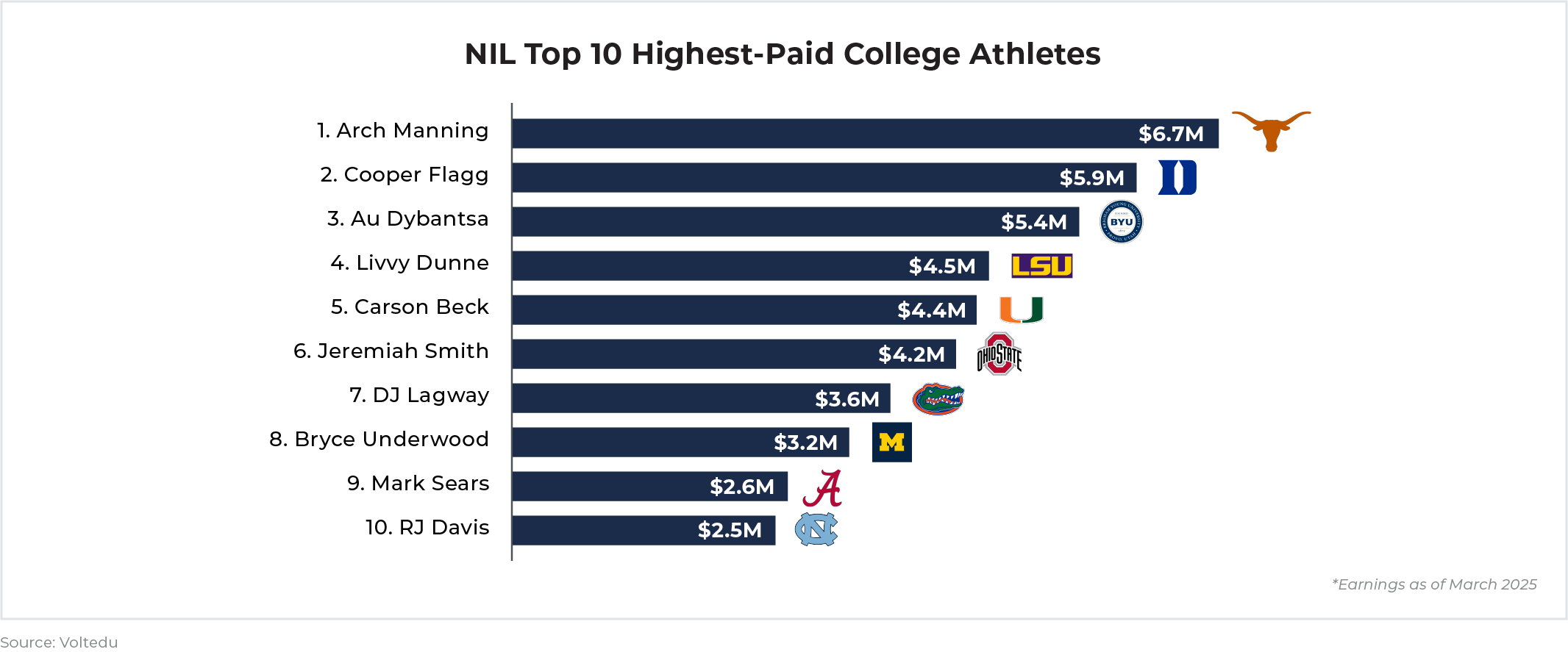
The rapid professionalization of collegiate NIL (Name, Image, and Likeness) and the "hypergrowth" of women's sports are significant forces driving the athletes’ ability to monetize their personal brands beyond traditional salaries. The NIL market alone has generated more than $1Bn in economic activity, with women accounting for 52% of the top 100 deals, according to SponsorUnited.
Women's Sports Commercial Explosion
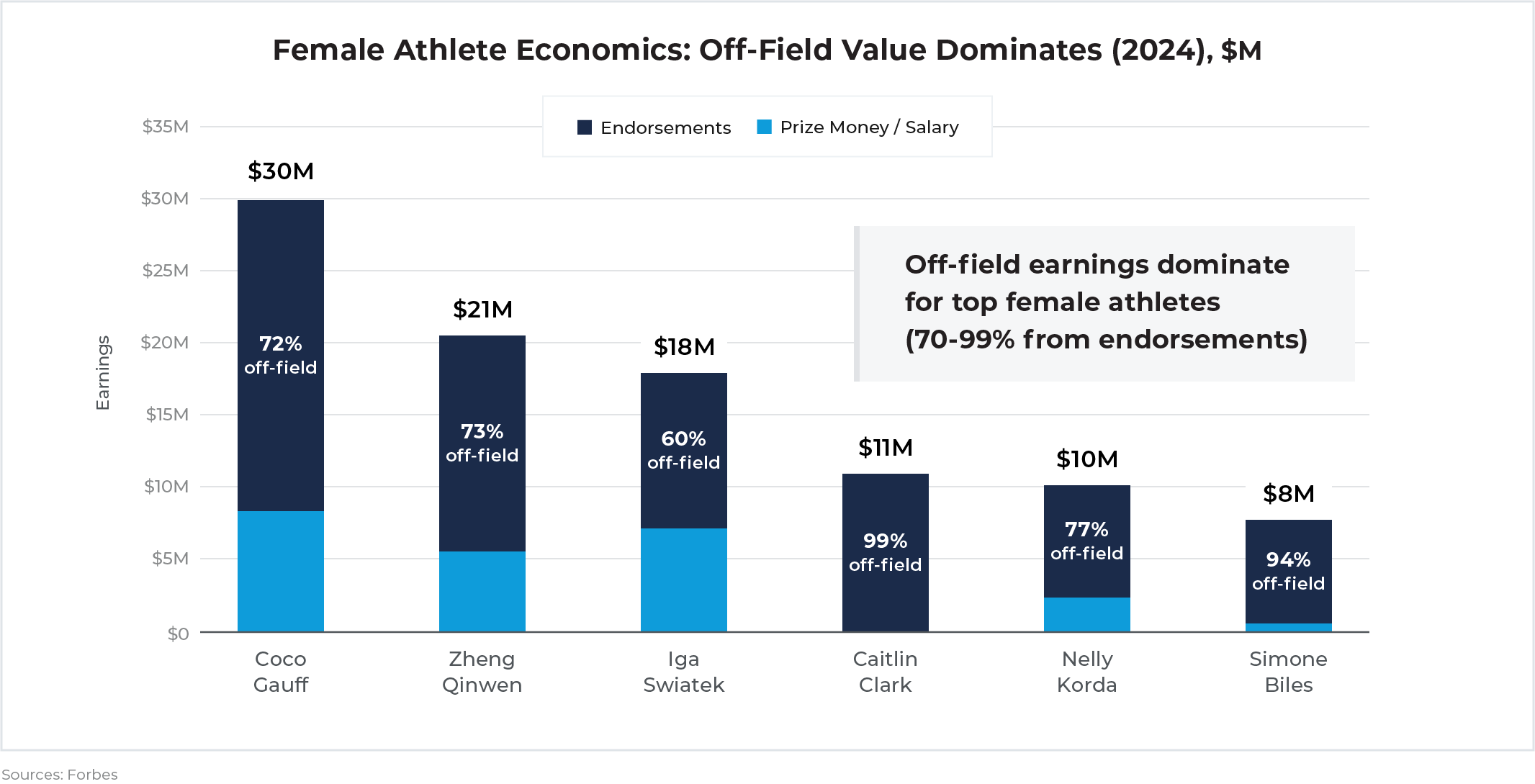
Women’s Sports Acceleration: WNBA expansion, Unrivaled's Season 2, Netflix's 2027 Women's World Cup, and exploding college women's basketball viewership are cementing women's sports as a scalable, premium media and sponsorship powerhouse. The revenue from women's sports NIL deals grew 4.5 times faster than men's sports from 2022 to 2024, driven by heightened visibility and fan investment, according to Opendorse. The top 15 highest-paid female athletes average just 25 years old, signaling a generational brand shift.
Democratizing Sports Data: Wearables for All, Fan Ownership for Teams
CONSUMER WEARABLES: DEMOCRATIZATION OF PERFORMANCE DATA
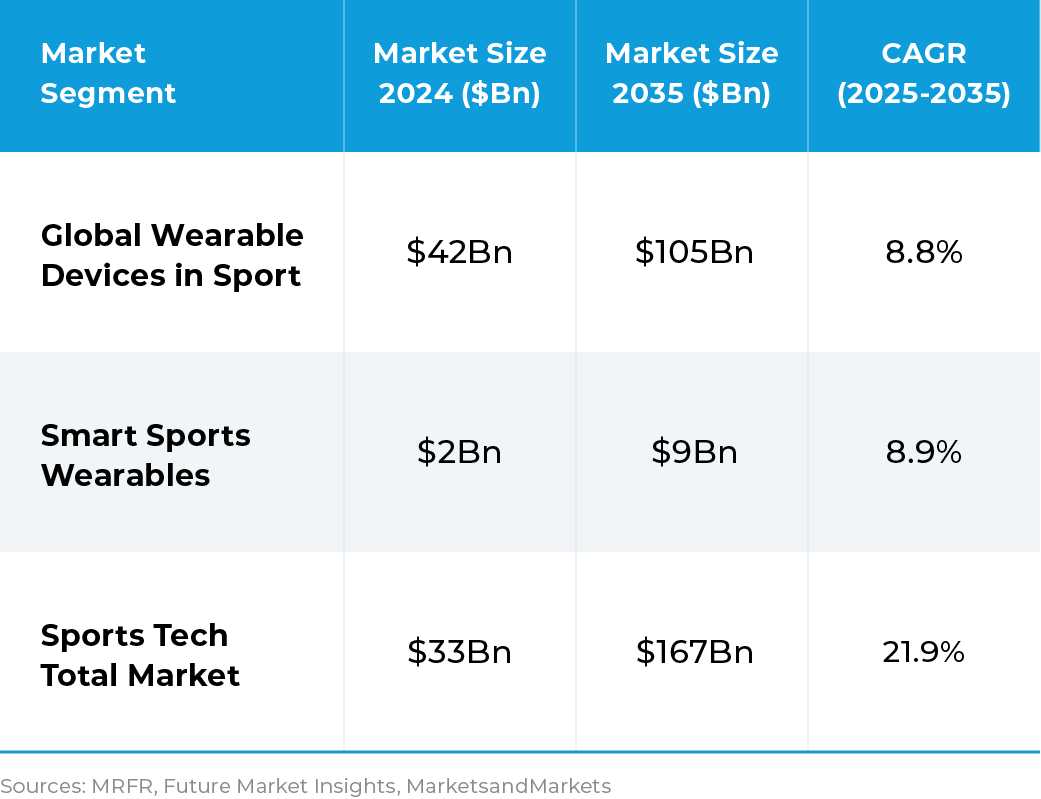
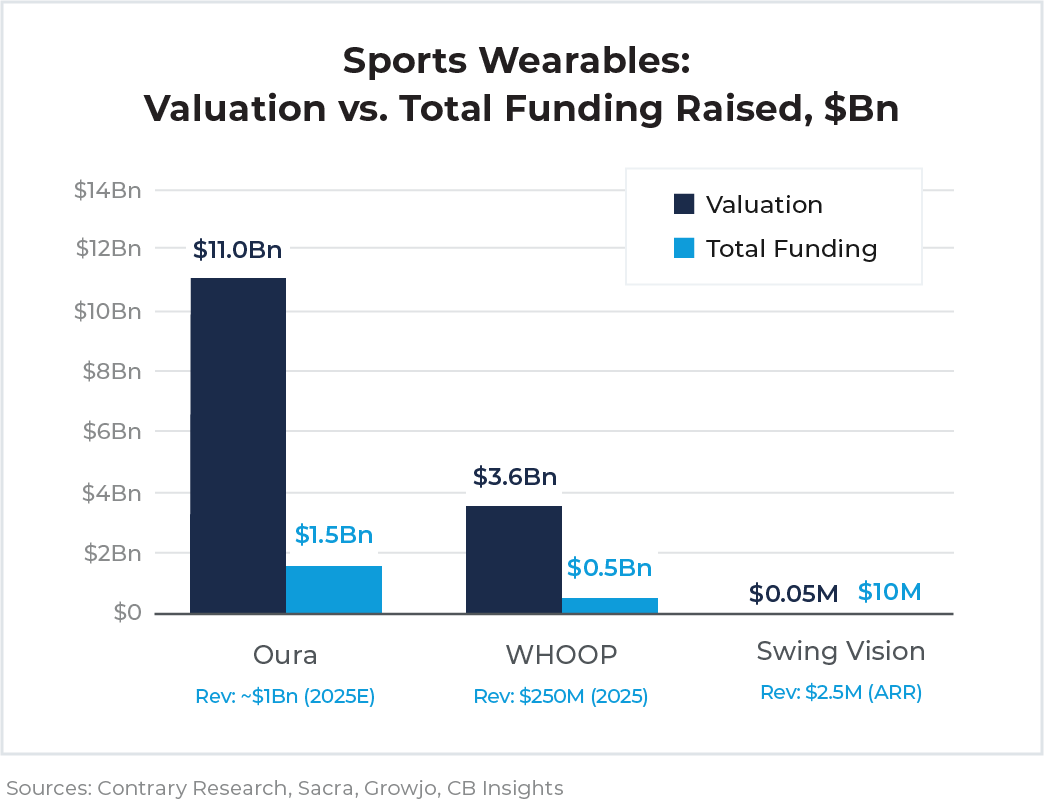
The wearable tech category is seeing a major TAM expansion as fitness tracking moves from elite athletes to the mass market. Backed by large growth rounds for platforms like Whoop and Oura, everyday users now access pro-grade recovery and strain metrics such as heart rate variability at home.
TEAM - FAN DATA AND DIGITAL ECOSYSTEMS
Teams and leagues increasingly own digital platforms to gather fan data and gain direct relationships with fans (bypassing ticket sellers, broadcasters). Leagues are building “digital ecosystems” that merge streaming, e-commerce and fan rewards under one roof.
Case Study: The Detroit Lions and Fan Satisfaction
The Detroit Lions reinvented their analytics capabilities by creating an "Analytics War Room" in collaboration with Snowflake and Trace3. By integrating data from Ticketmaster, Salesforce, and stadium sensors, the Lions monitor fan behavior in real-time. This led to optimizations in stadium signage and ticketing that ranked the Lions #1 in the NFL for game-day fan satisfaction in 2024.Sports AI Revolution. Prediction Markets At The Inflection Point
AI AS A FOUNDATIONAL DRIVER
Reports indicate that 82% of sports organizations already deploy AI (per SportsPro/Sportradar Global SportsTech Report 2026), with 98% planning increases. In 2025, around 45% of newly funded sports companies incorporated AI/ML (per Growth List data), a trend that's intensified.
Key Trends
Performance Analytics & Athlete-Focused AI: AI video tools automate player tracking, tactical breakdowns, and reporting, providing competitive edges. Advanced wearables feed ML models for injury prediction, recovery optimization, and personalized training.
Fan Engagement & Personalization: AI drives real-time highlights, personalized recommendations, prompt-based interactions, immersive experiences, and predictive modeling for everything from crowd patterns to personalized fan offers.
Generative AI as Operational Backbone: It's embedded in injury prevention, real-time coaching, content creation, and more.
PREDICTION MARKETS: $44Bn TRADING VOLUME
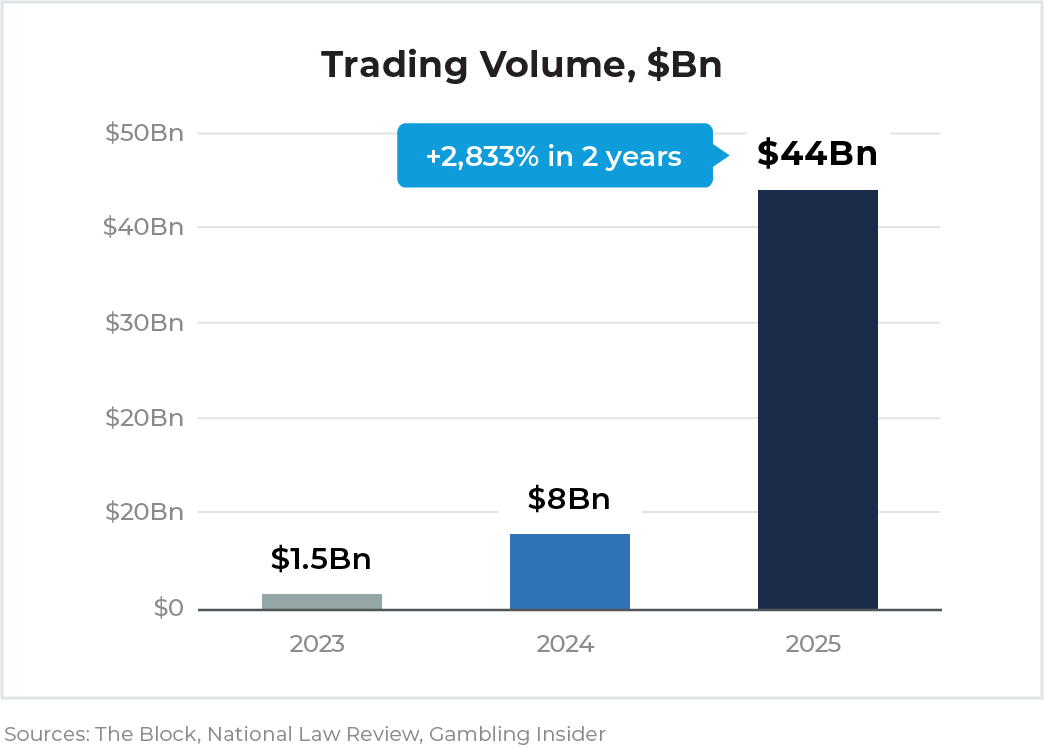
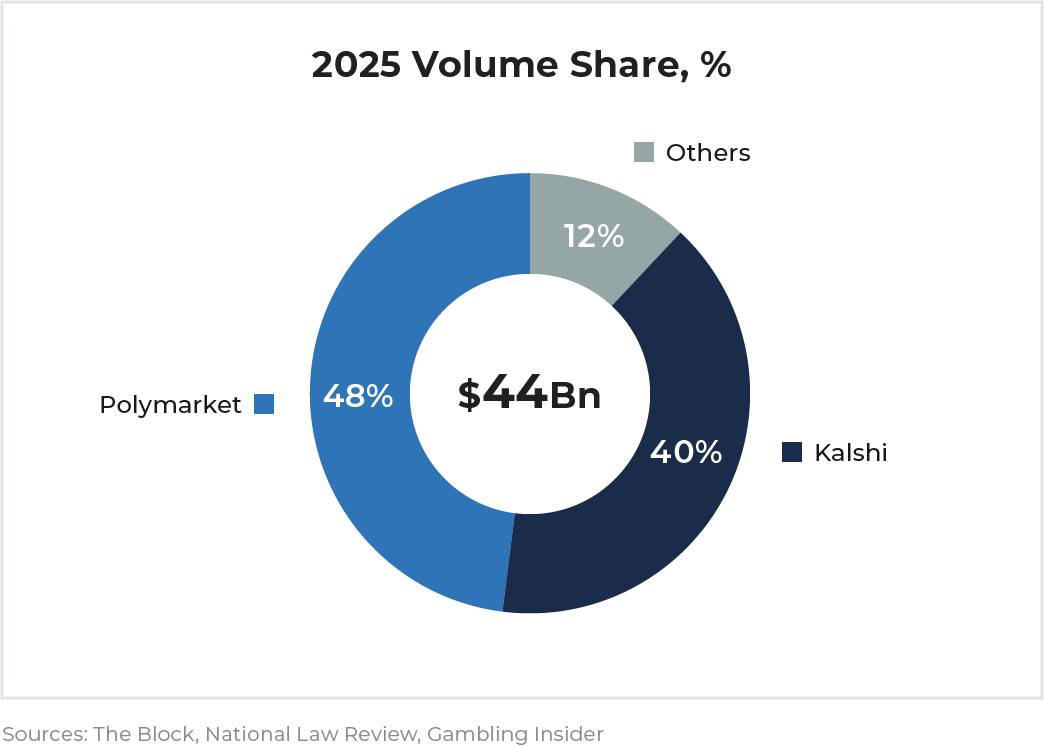
The rise of prediction markets represents one of the most disruptive financial trends in sports. Polymarket and Kalshi have created a de facto duopoly processing over $44Bn in trading volume in 2025.
Scale: Kalshi’s transaction volume was ~1,680% higher in 2025 than in 2024. In December 2025, Kalshi recorded $2.3Bn in weekly volume with 90% from football-related contracts. Sports is its primary growth driver. (Sources: The Block, National Law Review, Gambling Insider).
Sports Fintech 2026: From NIL Cash to Embedded Fan Wallet
Fintech solutions are reshaping sports through strategic league partnerships with giants like Visa and Stripe. These alliances accelerate adoption of blockchain for transparent payouts and digital wallets achieving significant in-stadium penetration.
Key Trends
In-Venue Transactions: Contactless payments via stadium digital wallets (e.g., NFC-enabled seats, AR concessions) cut queues by 50%+, boosting spend per fan by 20-30% amid $150-200Bn ticketing/merch TAM. Innovations like geo-fenced offers integrate with loyalty programs, driving impulse buys during live events.
OTT Streaming Finance: Embedded finance in platforms like DAZN or ESPN+ enables micro-transactions for highlights, bets, or NFTs. Real-time payouts for creators/athletes via stablecoins reduce delays from weeks to seconds.
Athlete Wealth Management: Platforms like SEMA offer tailored fintech for pros: high-yield cards, tax-optimized escrow for endorsements, and concierge investing in fractional franchise shares.
Blockchain meets sports:
-
Fan Engagement/Tokenization: Teams experiment with NFT collectibles (trading cards, exclusive content) and blockchain fan tokens for loyalty. For instance, NBA Top Shot popularized NFTs by selling highlight-video “moments” packs. Soccer clubs partnered with Chiliz/Socios to issue fan tokens (e.g. $PSG, $BAR) that allow fans voting rights and rewards via a crypto platform.
-
Ticketing: Ticketmaster now allows event organizers to issue tickets as NFTs. Startups like TixBase, GUTS and YellowHeart also offer 100% blockchain ticketing solutions.
-
Payment Rails: Stablecoins are powering fan tools and merch in the attention economy. Tether took a >10% stake in Juventus FC by mid-2025, in part focusing on blockchain for tokenized tickets and USDT fan engagement.
-
Betting & Prediction Markets: Polymarket and Kalshi (Web3-based) use smart “contracts for events” that can be traded peer-to-peer. Other crypto betting platforms exist outside U.S. as well, like fully decentralized predictions exchange Limitless Exchange.
10SQ team is actively tracking the sports attention economy and targeting portfolio investments in high-conviction infrastructure plays like fan data platforms, athlete brand tools, and AI-driven engagement tech. If you are building at the intersection of sports and the attention economy, please reach out to us.
This report is a product of the TenSquared Capital (10SQ) research team.
TenSquared Capital (10SQ) is a venture capital firm investing in the Attention Economy, where Media, IP, and Technology intersect.
Important Disclosures
This publication is an informational document only and is intended to provide educational content and general market commentary, and should NOT be relied upon as legal, business, investment, or tax advice. Furthermore, the content is not directed at nor intended for use by any investors or prospective investors in any TenSquared Capital LLC (“10SQ”) managed funds. Please visit tensquared.com/disclosures.html for additional important details and disclosures, including link to list of investments.